
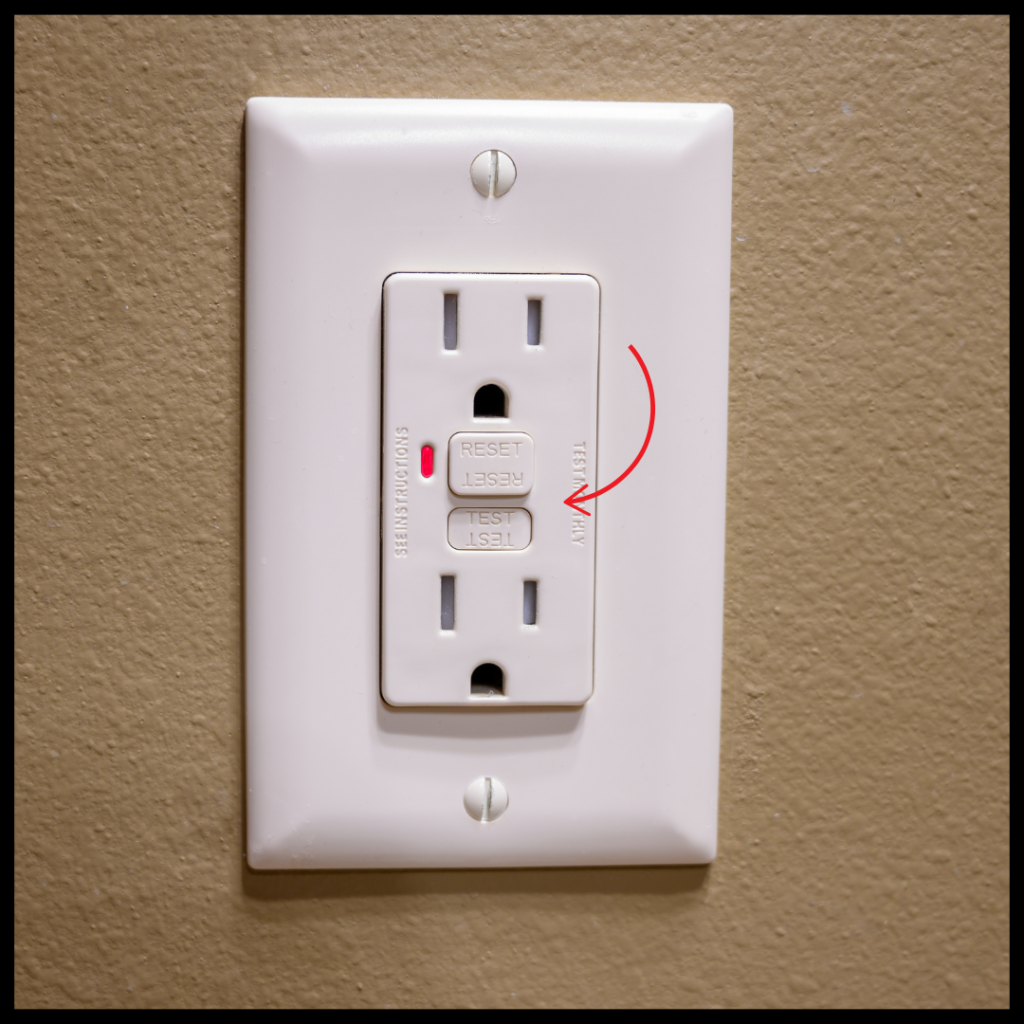
If you’ve ever looked closely at the outlets in your kitchen or bathroom, you’ve probably noticed a few with “TEST” and “RESET” buttons in the middle. You may know they’re there for safety, but do you know what they actually protect you from?
And then there’s AFCI protection, which you may never see at an outlet at all.
GFCI and AFCI protection are both important parts of a modern home’s electrical safety system, but they protect against very different hazards. One is primarily designed to protect people from electrical shock, while the other helps protect your home from electrical fires caused by dangerous arcing.
Understanding the difference can help you recognize potential electrical safety issues in your home and know when it’s time to call a licensed electrician.
Let’s break down GFCI vs. AFCI protection, where each is typically used, and why your home may need both.
What Is a GFCI?
GFCI stands for Ground-Fault Circuit Interrupter.
Its primary purpose is to help protect people from electric shock.
Normally, electrical current travels along its intended path through a circuit. A ground fault occurs when some of that current takes an unintended path to ground. This can become especially dangerous when a person becomes part of that path.
A GFCI constantly monitors the current flowing through a circuit. When it detects an imbalance that can indicate current is escaping from its intended path, it can shut off power very quickly.
That fast response is why GFCI protection is especially important anywhere electricity and water are likely to be near one another.
Where Are GFCIs Commonly Required?
You’ll typically find GFCI protection in areas such as:
- Bathrooms
- Kitchens
- Garages
- Outdoor areas
- Laundry areas
- Basements and crawl spaces
- Areas near sinks and other water sources
- Certain pool, spa, and similar installations
The exact requirements depend on the applicable electrical code and the type, age, and configuration of the installation.
GFCI protection also doesn’t necessarily mean every protected outlet will have TEST and RESET buttons. A GFCI receptacle can protect other receptacles downstream, and GFCI protection can also be provided through a circuit breaker in the electrical panel.
That’s one reason it isn’t always possible to determine how your home is protected just by looking at the outlets.
What Is an AFCI?
AFCI stands for Arc-Fault Circuit Interrupter.
While GFCIs are primarily intended to protect people from shock, AFCIs are designed to reduce the risk of electrical fires caused by certain types of electrical arcing.
An arc fault occurs when electricity jumps or flows across an unintended path. This can happen because of problems such as damaged wiring, deteriorated insulation, loose connections, or a damaged electrical cord.
The resulting heat can potentially ignite nearby combustible materials.
An AFCI monitors the electrical characteristics of a circuit and is designed to recognize certain dangerous arcing conditions. When one is detected, the AFCI interrupts the circuit.
Think of it this way:
GFCI = shock protection
AFCI = protection against certain electrical fire hazards caused by arcing
They address different risks, which is why one does not simply replace the other.
GFCI vs. AFCI: What’s the Main Difference?
The easiest way to understand the difference between GFCI and AFCI protection is to look at the hazards they’re designed to address.
A GFCI detects ground faults that could create a shock or electrocution hazard.
An AFCI detects certain types of electrical arcing that could lead to a fire.
For example, imagine you’re using an electrical appliance near water and current begins flowing along an unintended path. GFCI protection is designed to detect the imbalance and interrupt the circuit.
Now imagine a wire behind a wall has been damaged and begins producing dangerous arcing. An AFCI is designed to recognize certain characteristics associated with that arcing and shut down the circuit.
Both situations involve electricity behaving in a way it shouldn’t, but they are different electrical hazards requiring different types of protection.
Do You Need Both GFCI and AFCI Protection?
In many homes and applications, yes.
Modern electrical codes require GFCI and AFCI protection in numerous locations, and some circuits may require both types of protection.
This is where homeowners sometimes get confused. If GFCIs make a circuit safer, why would it also need an AFCI?
Because they’re doing two different jobs.
Having GFCI protection doesn’t mean a circuit is protected against all dangerous arc faults. Likewise, AFCI protection isn’t a substitute for required ground-fault protection.
There are also combination solutions that can provide both types of protection where appropriate. A licensed electrician can determine what protection is required for a particular circuit based on the current electrical code and the specifics of your home.
Why Don’t All My Outlets Have TEST and RESET Buttons?
This is another common misconception.
If an outlet doesn’t have buttons, that doesn’t automatically mean it isn’t GFCI protected.
One GFCI receptacle can sometimes provide protection to additional outlets wired downstream from it. GFCI protection may also be located at the circuit breaker instead.
AFCI protection is also commonly provided at the electrical panel, so you may have AFCI-protected circuits without special-looking outlets throughout the home.
If you don’t know which circuits are protected, an electrician can test the system and identify how the protection has been configured.
What Does It Mean When a GFCI Keeps Tripping?
A GFCI that trips once isn’t necessarily a sign that something is wrong with the device. After all, tripping when it detects a potentially unsafe condition is exactly what it’s designed to do.
Repeated tripping, however, deserves attention.
Possible causes can include moisture, a faulty appliance, damaged wiring, a ground fault somewhere on the circuit, or an issue with the GFCI device itself.
If you reset the GFCI and it immediately trips again, don’t keep forcing it to reset or assume replacing the outlet will automatically solve the problem.
The GFCI may be alerting you to an electrical issue that needs to be diagnosed.
Why Does My AFCI Breaker Keep Tripping?
AFCI breakers can also trip for a variety of reasons.
Sometimes there is a legitimate electrical issue, such as damaged wiring, a loose connection, or an arcing condition. In other situations, troubleshooting may be needed to determine whether a particular device or appliance is contributing to the problem.
What you don’t want to do is repeatedly reset a breaker without determining why it’s tripping.
A breaker that continually trips is communicating that something needs attention.
A licensed electrician can troubleshoot the circuit, identify the source of the problem, and determine the proper repair.
How Often Should You Test GFCI and AFCI Protection?
Those TEST buttons aren’t just decoration.
GFCI and AFCI devices should be tested according to the manufacturer’s instructions to verify that their protective functions are operating correctly. Many devices include instructions directly on the unit or accompanying documentation explaining the proper testing procedure.
For a GFCI receptacle, testing commonly involves pressing the TEST button and confirming that power is interrupted before using RESET to restore it.
AFCI breakers typically have their own test function at the electrical panel.
If a device fails its test, won’t reset properly, or behaves unexpectedly, it’s a good idea to have it evaluated rather than assuming everything is fine.
And remember: testing a safety device confirms its operation. It doesn’t replace a professional electrical inspection of the wiring, connections, panel, and other components throughout your home.
What About Older Homes?
If you own an older South Florida home, your electrical system may have been installed before many of today’s GFCI and AFCI requirements were adopted.
That doesn’t automatically mean your electrical system is unsafe, and electrical code requirements can depend on when work was performed and what changes have been made to the home.
However, older homes are especially worth evaluating.
Over the years, homeowners may renovate kitchens, remodel bathrooms, add appliances, convert garages, install outdoor equipment, or make other changes that affect the electrical system. Unfortunately, not every previous electrical modification was necessarily completed correctly or by a licensed electrical contractor.
If you don’t know the history of your home’s electrical system, an electrical inspection can help identify outdated components, missing protection, improper modifications, and other potential safety concerns.
GFCI and AFCI Protection During Home Renovations
Planning a renovation?
This is an especially important time to think about GFCI and AFCI protection.
Electrical work performed during kitchen remodels, bathroom renovations, additions, and other projects may trigger current code requirements for the circuits being installed or modified.
Instead of treating electrical safety as an afterthought, involve a licensed electrician early in the process.
That can help ensure the electrical system is properly designed for your new space, has sufficient capacity, and includes the required protective devices.
It’s much easier to address these details during a project than after the walls are closed and the renovation is finished.
Can I Replace a GFCI or AFCI Myself?
Electrical devices may look simple from the outside, but there’s much more happening behind the wall and inside your electrical panel.
Incorrect wiring can create shock hazards, fire hazards, nuisance tripping, or devices that appear to work while not providing the protection you expect.
There’s also a bigger question: Why does the device need to be replaced?
If an outlet stopped working or a breaker keeps tripping, replacing the visible component without diagnosing the underlying issue may not fix the actual problem.
When you’re dealing with electrical safety devices, professional installation and troubleshooting are worth it.
Signs It’s Time to Call an Electrician
You don’t need to understand every part of your electrical system to recognize when something isn’t right.
Contact a licensed electrician if you notice:
- GFCI outlets that won’t reset
- GFCIs or AFCIs that repeatedly trip
- Outlets or switches that feel unusually warm
- Buzzing or crackling sounds
- Discolored or scorched outlets
- Burning smells
- Frequently tripping breakers
- Flickering or dimming lights
- Damaged outlets or electrical components
- Older electrical equipment you’re unsure about
You should also consider an electrical evaluation if you’ve recently purchased an older home, are planning renovations, or simply don’t know whether your home’s electrical protection is up to date.
Electrical Safety Isn’t One-Size-Fits-All
GFCI and AFCI protection are great examples of why electrical safety involves more than simply having working outlets and lights.
Your electrical system includes multiple layers of protection designed for different hazards.
GFCIs help protect people from dangerous ground faults and electric shock. AFCIs help protect your home against certain fire hazards caused by electrical arcing.
Depending on the circuit and location, your home may need one or both.
And because electrical codes continue to evolve as safety technology improves, the electrical system in an older home may look very different from what would be installed today.
The goal isn’t to turn every homeowner into an electrician. It’s to help you recognize the safety features in your home, understand why they’re important, and know when something deserves professional attention.
Have Questions About Your Home’s Electrical Safety?
If you’re not sure whether your home has the proper GFCI or AFCI protection, FAM Electrical can help.
We provide professional electrical troubleshooting, repairs, upgrades, inspections, panel work, and other residential electrical services throughout Miami-Dade, Broward, and Palm Beach counties.
Whether you’re dealing with an outlet that keeps tripping, planning a renovation, or simply want a licensed electrician to take a closer look at your electrical system, we’ll help you understand what’s going on and recommend the right solution for your home.
Join the FAM and experience electrical done right.
📞 954-636-5836
FAMelectrical.com
Lic. EC13014611